
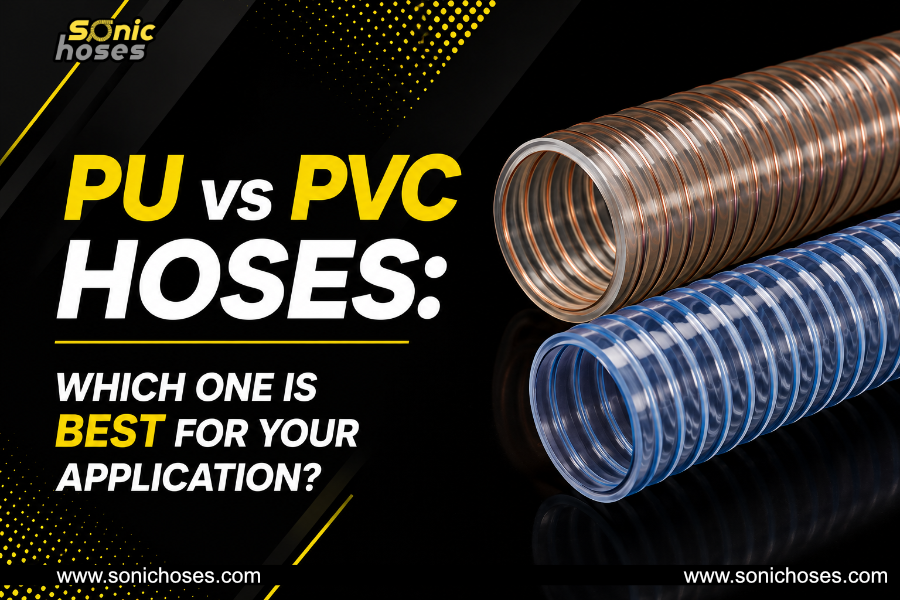
Choosing the right flexible hose for your particular industrial or household application can be very confusing at times. Polyurethane and polyvinyl chloride represent two of the most popular and versatile materials currently available on the market. This detailed article provides all the necessary information regarding their main differences to help you select the right one for your particular application needs.
What Are PU vs PVC Hoses?
Industrial hoses are produced in many distinct shapes and sizes to safely transport liquids and gases through various environments. Polyurethane and polyvinyl chloride are two different types of plastic materials that are used to produce flexible and durable tubes for modern applications.
Polyurethane hoses are extremely flexible and are able to bend easily without being damaged or kinked in any way. This particular physical property makes them perfect choices for those applications in which constant motion is required.
Polyvinyl chloride hoses have excellent resistance to a great number of common household chemicals and industrial oils. They are chosen for various applications that involve heavy chemical transport and prolonged outdoor exposure to direct sunlight.
Polyurethane works exceptionally well in freezing environments while maintaining its natural flexibility. In contrast, polyvinyl chloride becomes stiff in low winter temperatures.
Uses, Benefits, and Overview
Amazing Abrasion Resistance
Polyurethane hoses possess incredible abrasion resistance when they are dragged over rough concrete or gravel surfaces regularly. They are the perfect hose type for transporting highly abrasive materials like coarse sand, heavy gravel, and crushed rock without being worn out eventually. These hoses will last longer than standard polyvinyl chloride hoses when dealing with heavy-duty material handling applications in industries.
Temperature Adaptability
Polyurethane remains flexible and usable even in subzero conditions. Polyvinyl chloride, on the other hand, becomes stiff, brittle, and easily cracked under such conditions. You should definitely choose polyurethane if your particular commercial project requires reliable and consistent performance in changing seasons.
Budget-Friendly Solutions
Polyvinyl chloride is usually much cheaper to produce and buy than polyurethane options on the modern industrial market. Such incredible affordability makes them great choices for large-scale commercial projects in which extremely long hose runs are needed. You will be able to create a full equipment setup without sacrificing its basic functions and safety.
Lightweight
Polyurethane hoses are lighter than heavy polyvinyl chloride hoses of the same size and physical length. Such lightweight features make them much easier to move around factory floors and construction sites for your everyday operators. Reducing physical strain on your workers will significantly improve workplace safety and increase overall productivity of your staff members.
Chemical and Oil Resistance
Polyvinyl chloride provides fantastic protection against many harsh acids and alkaline solutions used during various manufacturing processes. The material won’t be degraded and weakened quickly while being exposed to these aggressive liquids during chemical transport. This chemical resistance makes it the perfect choice for laboratory environments, waste management, and agricultural spraying applications.
Kink Resistance and Memory
Polyurethane has amazing elastic material memory allowing it to recover quickly to its original shape after being bent. If you have accidentally twisted, stepped on, or crushed your hose during work, it will recover and won’t retain any permanent kinks. Polyvinyl chloride, on the contrary, is much more likely to develop permanent kinks affecting fluid flow and damaging your valuable equipment.
Food and Beverage Safety
Both these highly popular materials have specialized food grade options that fully follow all consumer safety requirements in this area. Polyvinyl chloride is commonly used for the transportation of clean drinking water, liquid dairy products, and beverages without adding any plastic taste. You should always remember to check the industry certificates before using any new hose in your food processing production line.
Longevity and Long Term Financial Value
While polyurethane always requires an increased financial investment, its increased operational lifespan provides it with better long-term financial value. You won’t have to replace these durable hoses as often as cheaper ones which get worn out within a few months. Such reliability significantly reduces maintenance downtime and lowers your overall operational costs for several years.
Visual Clarity and Inspection
Many high-quality polyvinyl chloride hoses have a completely transparent design providing you with the ability to inspect the material during daily operations easily. Operators can quickly notice any blockages, debris, or air bubbles in the internal fluid flow from a distance. This transparency helps you keep good process control without disconnecting your hoses from the machinery or stopping production lines.
Pressure and Vacuum Resistance
Polyurethane hoses handle high-pressure environments and vacuum applications much better than standard polyvinyl ones can do. Their strong material structure prevents the thick walls from collapsing due to heavy suction or fluid pressure. This makes them suitable for powerful pneumatic tools, air compressors, and heavy-duty vacuum systems.
Conclusion
Your choice between these two materials ultimately depends on your particular operating environment and budget. Polyurethane is better than polyvinyl chloride in terms of durability and flexibility while polyvinyl is more affordable in chemical transport applications. Careful evaluation of your project demands will ensure that you select the perfect hose. If you sill have questions on choosing the hoses that best suit your requirements, contact our team at Sonic Hoses.