
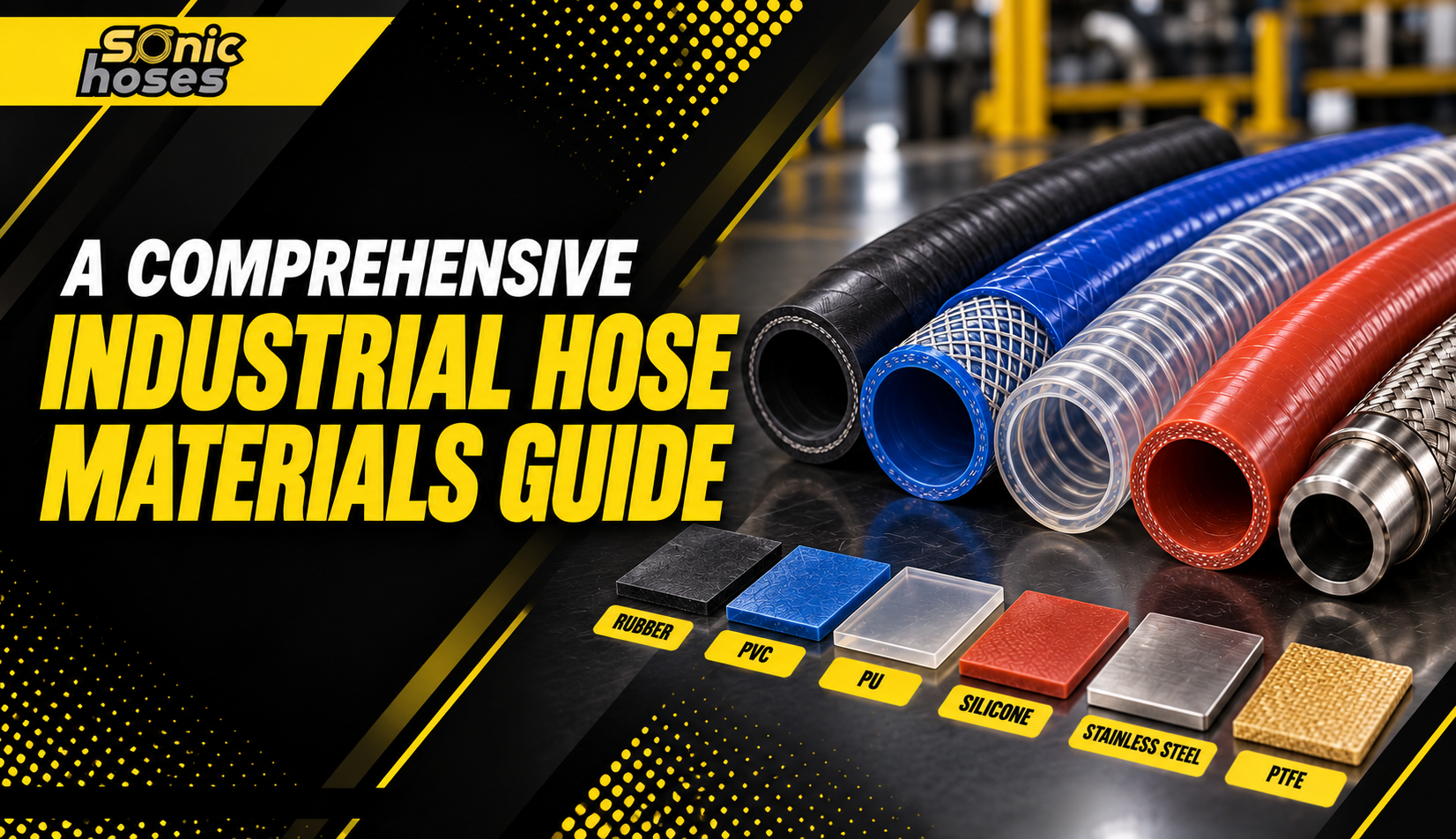
Hose materials form an integral part of industrial activity today. Their application is important in ensuring that the liquids, gases, or other bulk materials are safely transported from one place to another on the site or inside the factory. This guide focuses on common hose materials and how you can choose the most suitable one for your business operations.
Industrial Hose Materials: What are they?
The industrial hose materials refer to the specific materials that are made use of to produce fluid transfer lines in industries. The hoses and their outer coverings are produced using specific types of rubber materials and fluoropolymer materials to ensure that they can withstand pressure, friction, and extreme temperatures. The selection of suitable material for the hoses is essential to enable transfer of abrasive gravel, corrosive acids, or hydraulic fluids.
1. Rubber Compound Materials (Natural and Synthetic)
The rubber compound material of nitrile, neoprene, and EPDM offers great flexibility and impact resistance in tough conditions. The rubber material has good absorption capability of vibration and constant physical bends on rough factory floor surfaces.
2. Thermoplastic and Polymer Materials
Thermoplastic materials include PVC and polyurethane which have light weight and resistance to abrasions. The operators find it easy to manage the smooth plastic tubing while transferring the granular, dry substances, and utilities through water supply lines.
3. Fluoropolymers and Specialty Synthetics
Advanced synthetic polymers such as PTFE and silicone perform well under high temperatures and have excellent resistance to chemical corrosion. Processing plants rely on such nonstick liners to transport pharmaceutical components and acids.
Major Hose Components and It's Uses
1. Nitrile Rubber Hose for Oil and Gasoline Conveyance
Nitrile rubber is used in hose manufacturing as the common component for transferring fuels, lubricating oil, and hydraulic fluid. The artificial nature of nitrile rubber makes it resistant to swelling due to oil hydrocarbons. The personnel of fleet services and fuel tankers use nitrile rubber hoses to avoid fuel leakage.
2. EPDM Rubber for Steam and Weathering
It is an artificial rubber compound that offers excellent protection against extreme temperature steam, hot water, and tough environmental conditions. It never stiffens or cracks when constantly subjected to extreme exposure to sunlight, ozone and freeze-thaw cycles. Boiler and chemical plant personnel fit EPDM rubber hoses for transporting heated cleaning fluids throughout huge industrial facilities.
3. Neoprene as an Exterior Protective Cover for Hoses
The material neoprene offers a good synthetic rubber that is resistant to mild oil exposure and exhibits excellent exterior mechanical strength. The neoprene outer cover is used by manufacturers to safeguard the reinforcing layers inside from any welding sparks, scratches, and friction due to pulling. Neoprene hoses are favored by shipyards and harbors since they do not crack in salty sea environments.
4. Polyurethane for Abrasive Material Transport
Polyurethane is an abrasive-resistant material that offers much greater protection against abrasions than regular rubber in materials that experience dry high friction transport. The smooth inner bore of this material allows easy transport of such materials as plastic pellets, wood shavings, and minerals. Woodwork factories and grain elevators use flexible polyurethane tubing to avoid material clogging.
5. Flexible PVC for Low Pressure Fluids Handling
Flexible polyvinyl chloride offers an inexpensive and light material that can be used in water transport applications and pneumatic low pressure systems. The clear walls enable the plant staff to view the inner flow of the fluid and detect any blockages before freezing of the pipelines occurs. Agriculture farms and commercial construction sites use flexible PVC hosepipes for ditch draining and irrigation water distribution.
6. PTFE for Harsh Chemical Conveying
PTFE provides unparalleled resistance to highly acidic solutions, alkali substances, and aggressive solvents used in industry. The smooth nonstick inner wall does not allow the accumulation of any sticky liquid and is easy to clean with steam between production runs. The labs and chemical factories use stainless steel reinforced PTFE hoses to convey corrosive liquids without fear of contamination or leakage from storage barrels.
7. Silicone for High Temperature Applications
Silicone rubber possesses high elasticity over a wide range of temperatures and is odorless and non-reactive. The material does not support bacteria development and is able to withstand high-temperature sterilization cycles repeatedly without emitting any toxic compounds. Food processing and beverages bottling plants utilize silicone hoses to transfer juices, heated milk, and syrup products.
8. Natural Rubber for Discharging Coarse Slurry
Natural rubber is highly elastic and flexible with great physical resistance to sudden impact from jagged rocks. As opposed to getting ripped due to harsh slurry flow, natural rubber acts by deflecting particles away from its surface to protect the internal walls. Mining companies and quarry plants require heavy-duty natural rubber hoses for discharging minerals slurry without blowing up pipelines.
9. Composite Material Hoses for Bulk Terminals
Hoses made from composites have multiple spiraling layers made of special polymer films, fabric and internal metal spirals in one single hose. The multi-layered structure makes the hoses extremely strong at resisting negative vacuum pressure with the added advantage of remaining light enough to handle. Harbor bunkering terminals and fuel distribution centers require composite hoses when transferring bulk petrochemicals and chemicals cargo.
10. Extreme Temperature Stainless Steel Hoses
The corrugated stainless steel hoses resist high and low temperatures in which normal synthetic hoses may melt or break down. There is no way that gas permeation can occur due to the total imperviousness of the metal layer while protecting the inner conduit from possible crushing by heavy materials outside. Plants use these hoses to safely transport the steam and exhaust without decomposing.
Conclusion
To select the right type of hose material, your facility needs to match the characteristics of the substance you need to transfer, pressure, and workplace temperature with the capabilities of the particular hose material. Purchasing a high-quality liner and covering your facility will ensure the safety of your workers and prevent the equipment downtime. To choose the right hose that suit your requirements and to get to know in detail about the things to be taken care of while using industrial hoses, talk to our team at Sonic Hoses.